

Internal tools that replace your spreadsheets.
Dashboards, ops tools, and integrations built around how your team actually works — by senior engineers who ask why before writing a line.
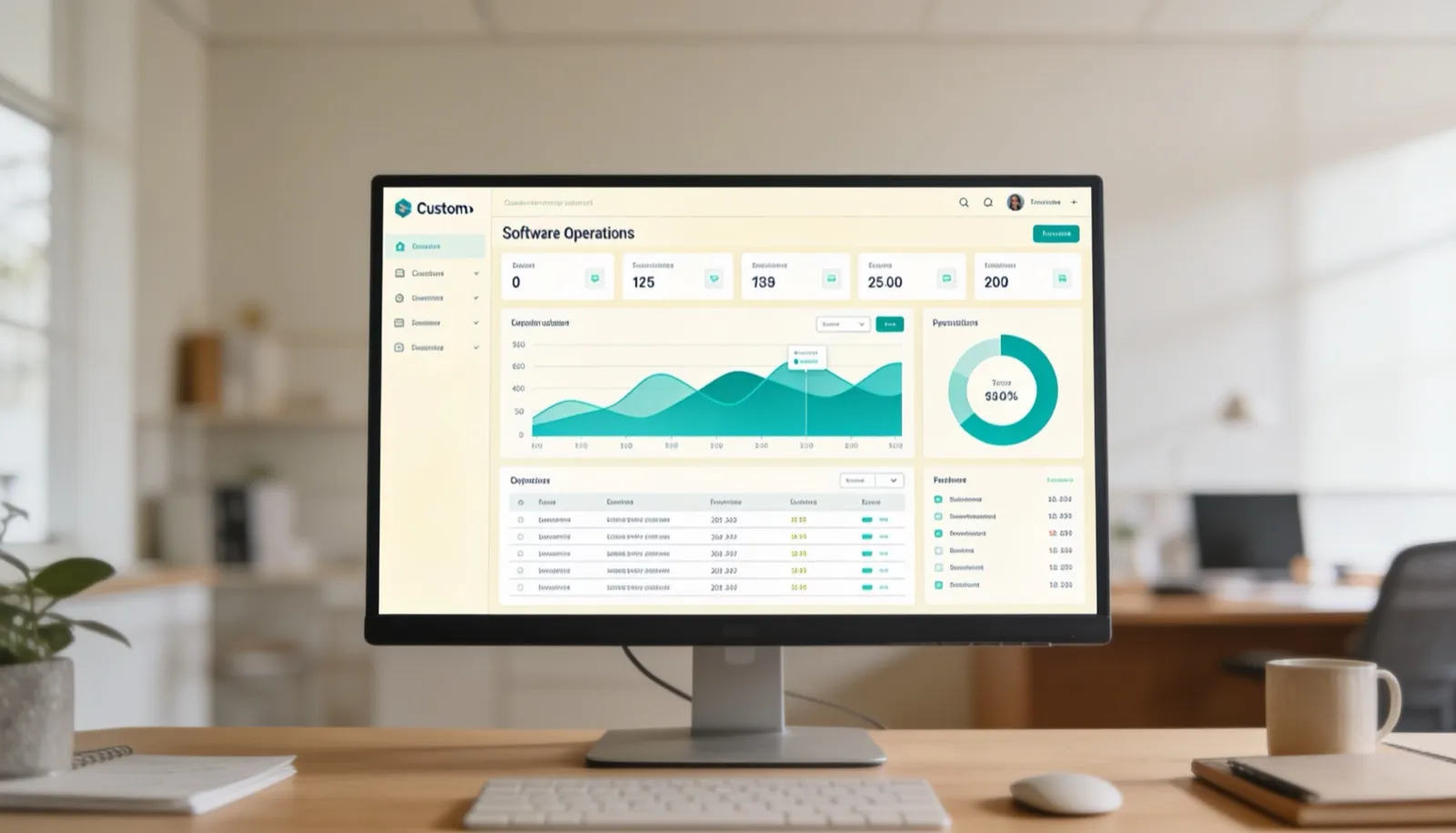
The best internal tool is the smallest one that kills the most busywork. We don't sell platforms; we find the workflow that bleeds the most hours and build the thin, boring, reliable thing that fixes it.
What you get.
Workflow mapping before code. We sit with the people doing the work and map the real process — not the documented one.
Senior engineers only. No juniors learning on your budget. The people who scope it build it.
Integrations with your stack. ERPs, CRMs, sheets, legacy APIs — we connect to what exists instead of demanding replacement.
Role-based access and audit trails. Permissions and logging from day one, not bolted on after the first incident.
Documentation your team can use. Handover docs, runbooks, and a recorded walkthrough — the tool survives staff turnover.
Honest build-vs-buy advice. If Retool, Airtable, or an off-the-shelf product does it, we'll say so and save you the build.
How this engagement runs.
Map
1 weekShadow the workflow, find the hours, agree the success metric.
Architect
1 weekData model, integration map, tool choices, security review.
Build
3–8 weeksWeekly demos with the actual end-users in the room.
Adopt
1–2 weeksTraining, parallel-run with the old process, then cutover.
Operate
OngoingMonitoring, fixes, and iteration as the workflow evolves.
Productized, AED-priced.
Spark
From AED 45,000
One workflow, one tool — e.g. an approvals dashboard or quoting tool.
Build
From AED 110,000
Multi-workflow ops tool with integrations and role-based access.
Scale
From AED 250,000
Department-wide systems with data pipelines and reporting.
Custom
Let's scope it
Multi-entity, regulated, or legacy-replacement programmes.
Pricing reflects scope, not seniority. Every project gets senior engineers.
Questions buyers actually ask.
How is this different from no-code?
It often isn't — and when Retool or n8n is the right answer, that's what we'll build on. We write custom code when the workflow outgrows no-code: complex permissions, heavy data, or anything customer-facing.
Do you integrate with our existing stack?
Yes — that's usually the point. ERPs, CRMs, accounting systems, spreadsheets, and legacy APIs. We've yet to meet a stack we couldn't connect to, though some make us earn it.
Who owns the IP?
You do, entirely, from the first commit. Code, designs, documentation — all in accounts you control.
Can we self-host?
Yes. We default to your cloud accounts (AWS, Azure, GCP, or UAE-based hosting where required) so there's nothing to migrate later.
How do you handle data security?
Least-privilege access, encrypted at rest and in transit, audit logs, and UAE PDPL-aligned data handling. For regulated industries we'll walk your compliance team through the architecture before we build.
What if requirements change mid-build?
They will — that's normal. Weekly demos surface changes early, and we re-scope openly: what's added, what's deferred, what it costs. No silent scope creep, no surprise invoices.
Find the hours your team is losing.
Bring us the workflow that hurts. We'll tell you what fixing it takes — and whether it's worth it.